
Medicare Advantage - AEP 2027
Lower premiums, higher out-of-pocket costs, and fewer extras
Annual Enrollment Period opens October 15. We compared CMS Plan Compare data for plan years 2026 and 2027. The premium is going down. The cost of actually using your plan is going up.
Based on an internal analysis dated October 1, 2026

The plan count barely moved. Your choices did.
Total plans slipped only 1.4%. Underneath, 1,148 plans are new and 1,233 from 2026 are gone. Only 4,732 plan IDs carry over.
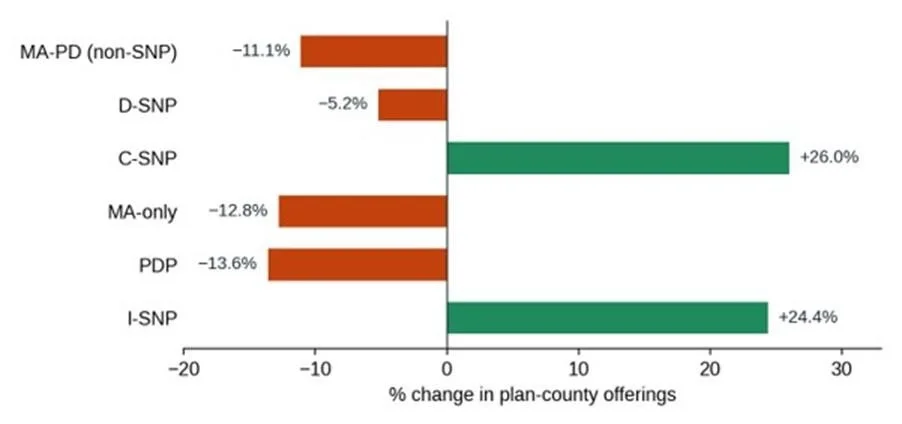
Local choice shrank more than that number suggests. Plan-by-county offerings fell 7.2%. Standard MA-PD plans lost 11.1%, MA-only plans 12.8%, and stand-alone drug plans 13.6%. Carriers are putting their growth into Special Needs Plans, especially chronic-condition SNPs.
Change in plan-county offerings by segment, 2026 to 2027
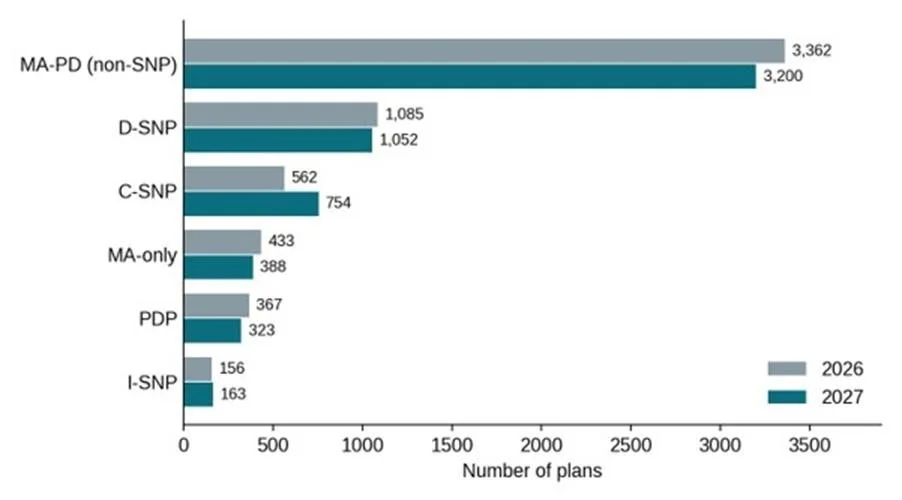
Chronic-condition SNP plans grew 34.2% by plan count, from 562 to 754.
Plans offered by segment
Premiums fell. Cost sharing rose.
Beneficiaries will notice the premium first. The share of $0 premium plans rose from 68.8% to 75.3%, and the average monthly premium fell from $17.65 to $16.68.
The in-network out-of-pocket maximum (MOOP) is the worst-case bill for a year of care. The median rose from $6,500 to $7,100, and the median drug deductible climbed from $520 to $650. The average specialist copay went from $17.06 to $19.33.
What happened to the 4,441 plans offered in both years
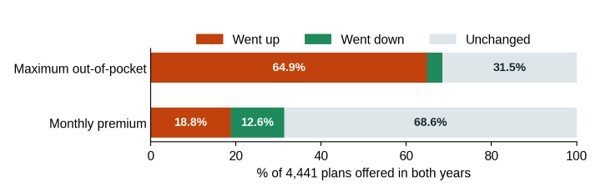
Specialist copay: 17.3% of plans went up and 4.9% went down.
The median urgent care copay fell from $20 to $10. That is mostly plans entering and leaving the market, not existing plans getting cheaper. Skilled nursing, inpatient and outpatient cost sharing also shifted for most continuing plans, partly because Medicare's skilled nursing rate for days 21–100 rose from $218 to $221 a day.
New benefits are mostly service-based
Carriers are adding lower-cost benefits that are easy to market. A nursing hotline is now on more than a third of MA plans.
New benefits in 2027
Share of MA plans offering each new benefit.
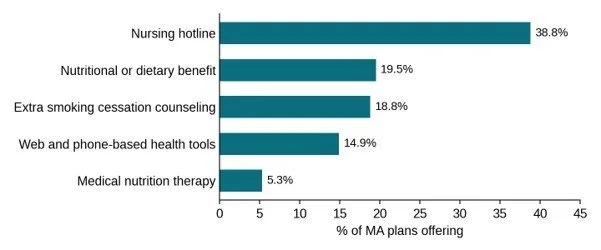
Enhanced disease management, in-home safety assessment and telemonitoring each appear on 1.4% to 4.0% of plans.
Fitness benefits are now itemized in more detail: 85.5% of plans cover the gym, 47.7% equipment or a kit, 38.6% an activity tracker, and 19.0% memory fitness. Caregiver support slipped from 9.7% to 7.5% of plans, and 965 plans now write prescription hearing aid coverage as per-ear limits.
What's being cut
Several popular extras are less common. Over-the-counter hearing aids fell by half, from 37.6% to 18.7% of plans. Telehealth and worldwide emergency care each dropped about 15 points.
Benefits losing the most ground
Change in the share of plans offering the benefit, in percentage points.
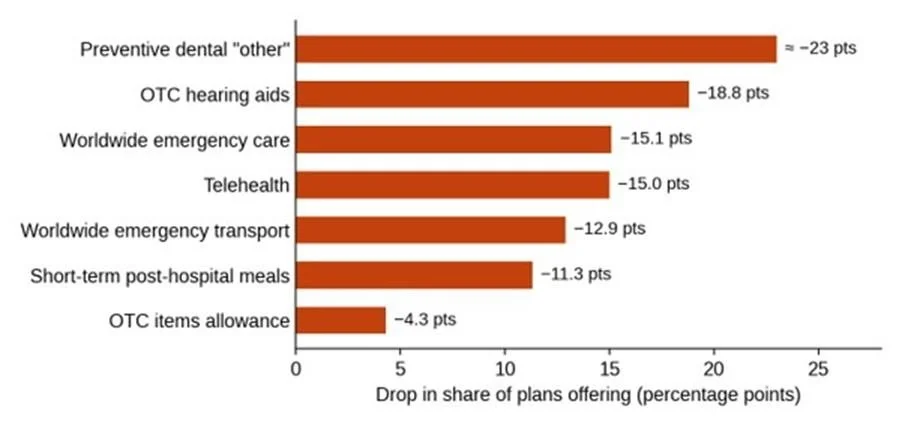
Chiropractic, personal emergency response systems and others each fell by less than 3 points.
A few benefits gained. Eyeglass coverage is consolidating into one frames-and-lenses benefit (79.6% to 92.9%), dental implants rose from 15.1% to 24.2%, and weight management from 13.1% to 18.8%.